Pablo Allepuz, Rafael García, Germán Labrador, Beatriz Martínez, José A. Sánchez y Teresa Velázquez
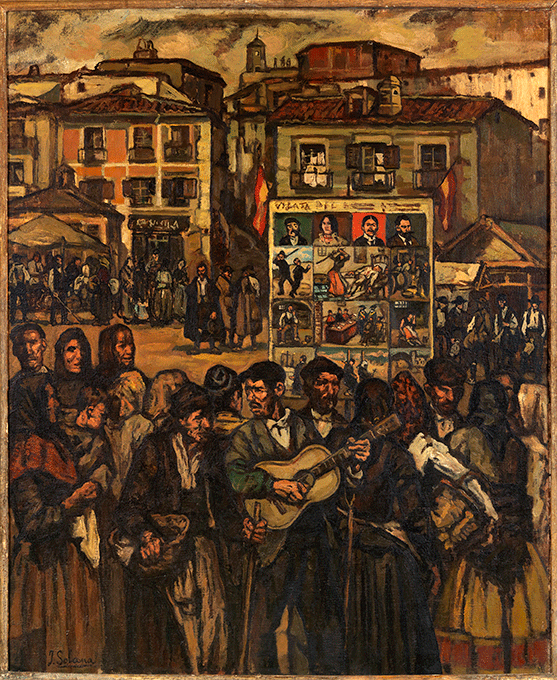
José Gutiérrez Solana, The Crime Poster, 1920. Oil on canvas, 82 × 62 cm.
The exhibition Esperpento. Popular Art and Aesthetic Revolution examines the concept of esperpento, coined by Ramón María del Valle-Inclán (1866–1936) as an aesthetic way of thinking and a new way of viewing reality. Through distance and distortion, esperpento emerged as a critical response to the moral paralysis of early 20th-century Spain, challenging social, political and cultural conventions. Unlike other European manifestations of the grotesque, which focused primarily on portraying the absurdity of existence, esperpento also carried a desire for social transformation.
The exhibition brings together a wide variety of works and documents to explore the themes and devices that define this aesthetic, the impact of which has long outlived its creator. Organised into eight sections, it traces a journey from 19th-century precedents of distortion to the image of Spain as a vast arena, passing through the disorientation of the post-war period, popular traditions and puppetry, the decline of bohemian culture, the coexistence of religiosity and instinct, and the figure of the grotesque leader, which continues to resonate today.

