The Hospital de St Saver opens a new chapter with a second presentation of works from the Casacuberta Marsans Collection.
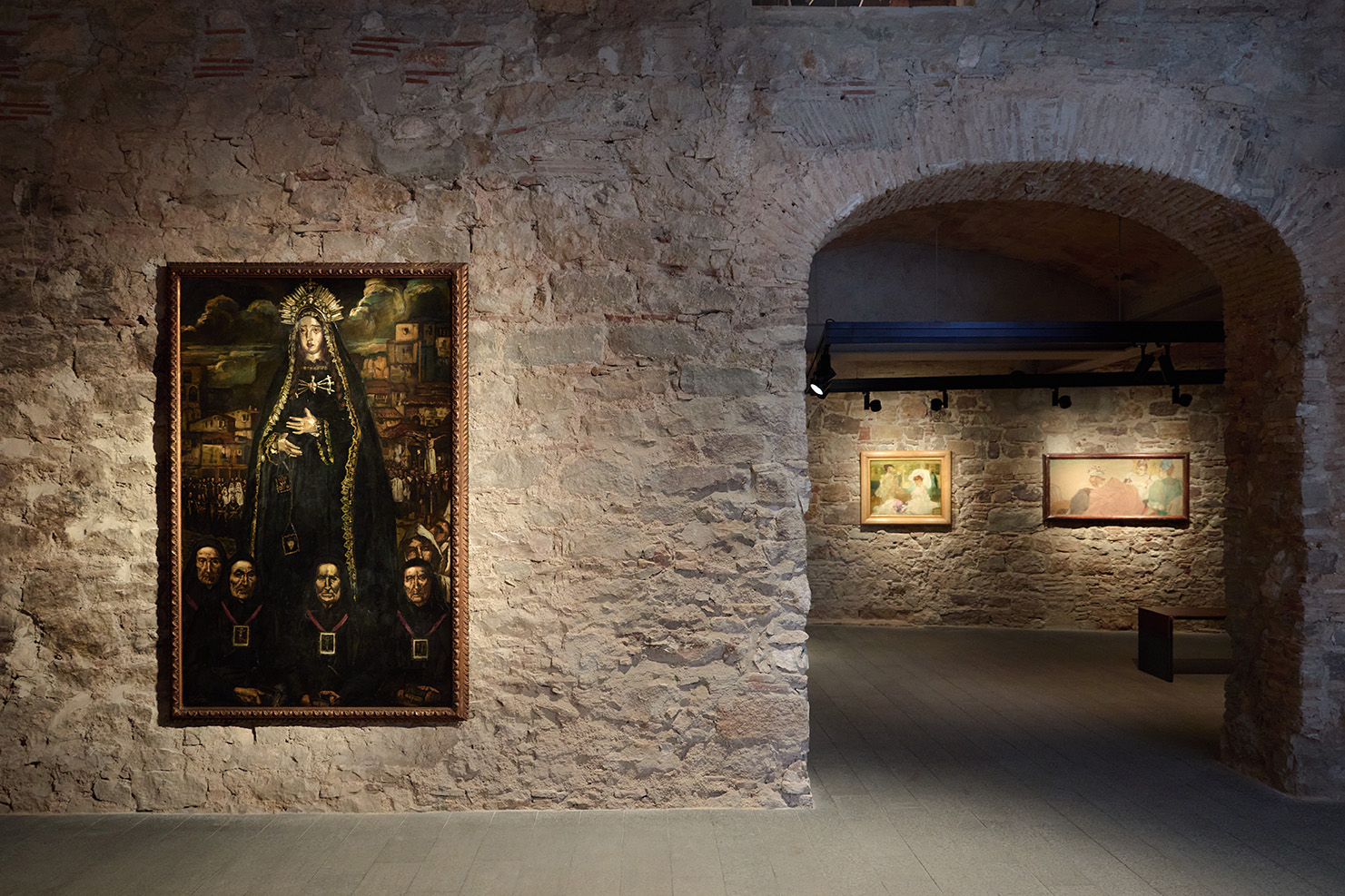
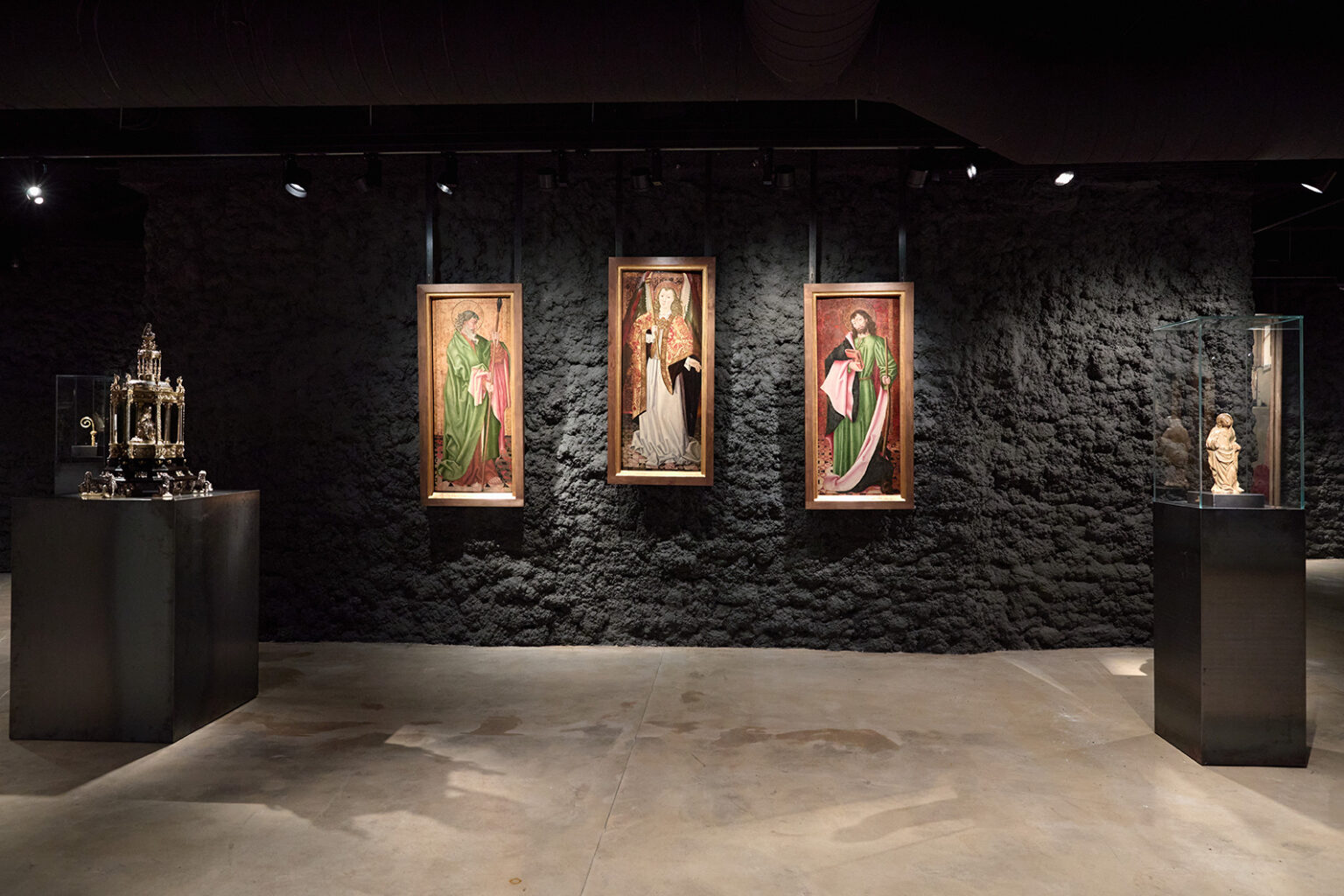
This renewed selection, headed by a work by El Greco recently added to the Collection, can be seen at the Hospital de St Saver. Chosen for their singularity, the works enter into dialogue with one another and with the surrounding architecture, with the aim of creating new narratives and settings for their contemplation. Guided by the conservation and mediation team, visitors will be able to discover the Casacuberta Marsans Collection, the conceptual and stylistic relationships between the works on display, and the history and architecture of the Hospital de St Saver, a listed building in Barcelona’s Gothic Quarter. This new presentation comes a few months after the first anniversary of the Hospital de St Saver, the exhibition space of the Casacuberta Marsans Collection, which opened in November 2024. In line with the first selection of works presented at that time, this one brings together a wide range of territories and periods of Hispanic art from a contemporary perspective. The coexistence of these pieces highlights the importance of artistic exchanges between the artists represented in the Collection. In this way, visitors can explore how figures and models from other territories converged with local art, and how native artists reinterpreted them in a language of their own. Visitors will be able to discover major artists such as El Greco, Bartolomé Bermejo, Diego de la Cruz, Joaquim Mir, Santiago Rusiñol and Hermen Anglada-Camarasa, among many others.
El Greco and his first monumental Crucifixion head the new selection of works on display
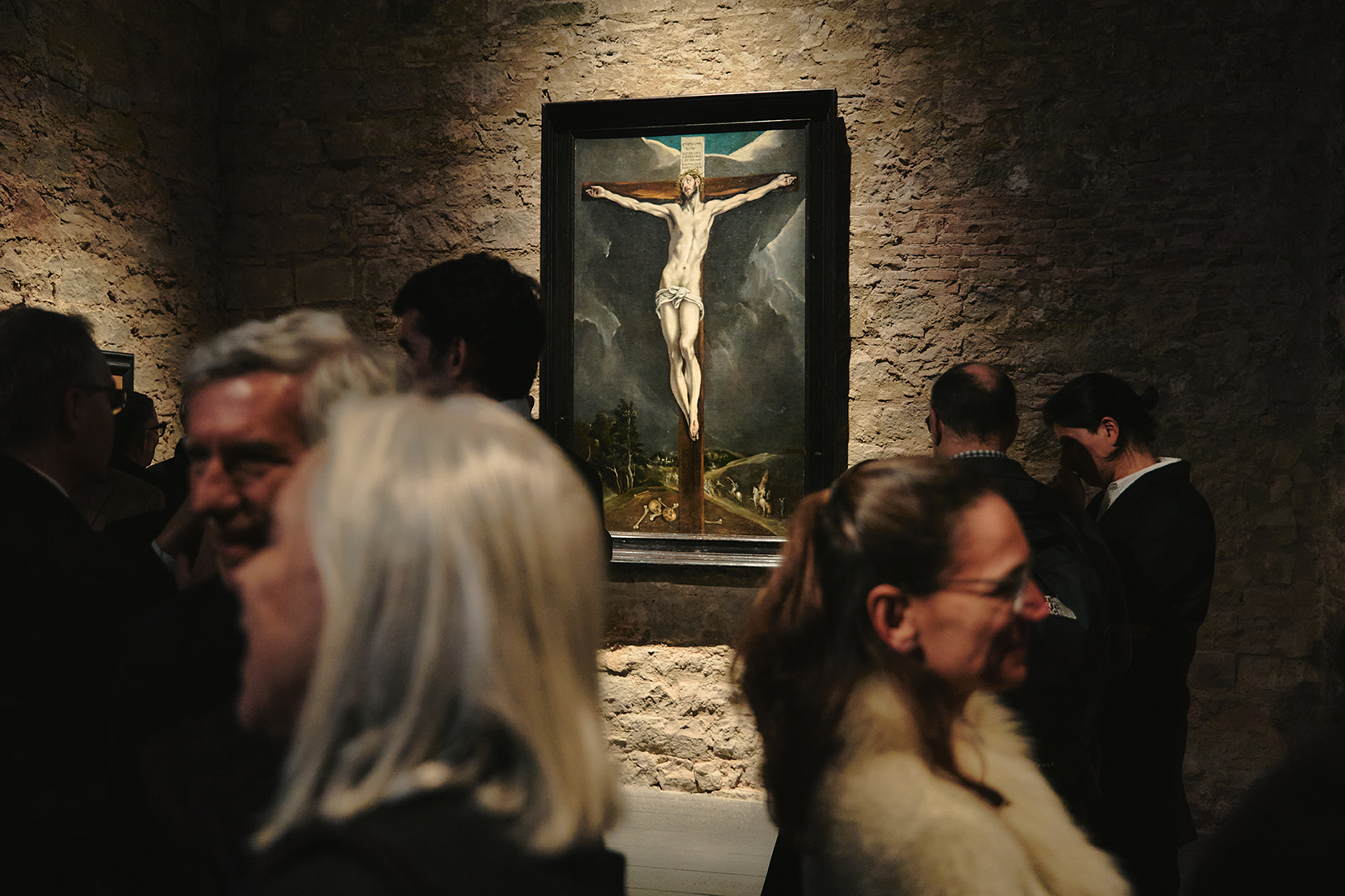
The Casacuberta Marsans Collection is pleased to present the addition of a work by El Greco, which heads the new presentation of works at the Hospital de St Saver.
This Christ on the Cross, measuring 178 × 104 cm and dated to around 1585–1590, is considered the earliest of El Greco’s crucifixions. Its closest iconographic precedent is the so-called Crucifixion with Two Donors (Paris, Musée du Louvre), from the Convento de la Reina in Toledo.
The earliest surviving reference to this painting dates from 1908, when Manuel B. Cossío published his well-known monograph on the Cretan painter. He learned of the work through the German art critic Meier-Graefe, who, years earlier, together with the jurist and educator José Castillejo (associated with the Institución Libre de Enseñanza), had visited the Seville palace of the 2nd Count of Águila, where the work was kept. Meier-Graefe and Castillejo remarked at the time that:
“its owners have dusted off the Greco they kept in a dark corner of the chapel, and they still fail to understand how it could have any value, with its head so small and its body so long, so long”
The presentation of this work at the Hospital de St Saver brings to four the number of works by El Greco accessible to the public in Barcelona. Its display connects El Greco’s dramatic painting with the tradition of “España negra” [Black Spain], as well as with Catalan Modernisme, which championed his reappraisal by exalting his expressive power over realism.
In this way, this Christ on the Cross establishes multiple conceptual and stylistic connections with the works by José Gutiérrez Solana, Ignacio Zuloaga, Santiago Rusiñol and Ramon Casas in the collection. These connections can currently be explored at the Hospital de St Saver.