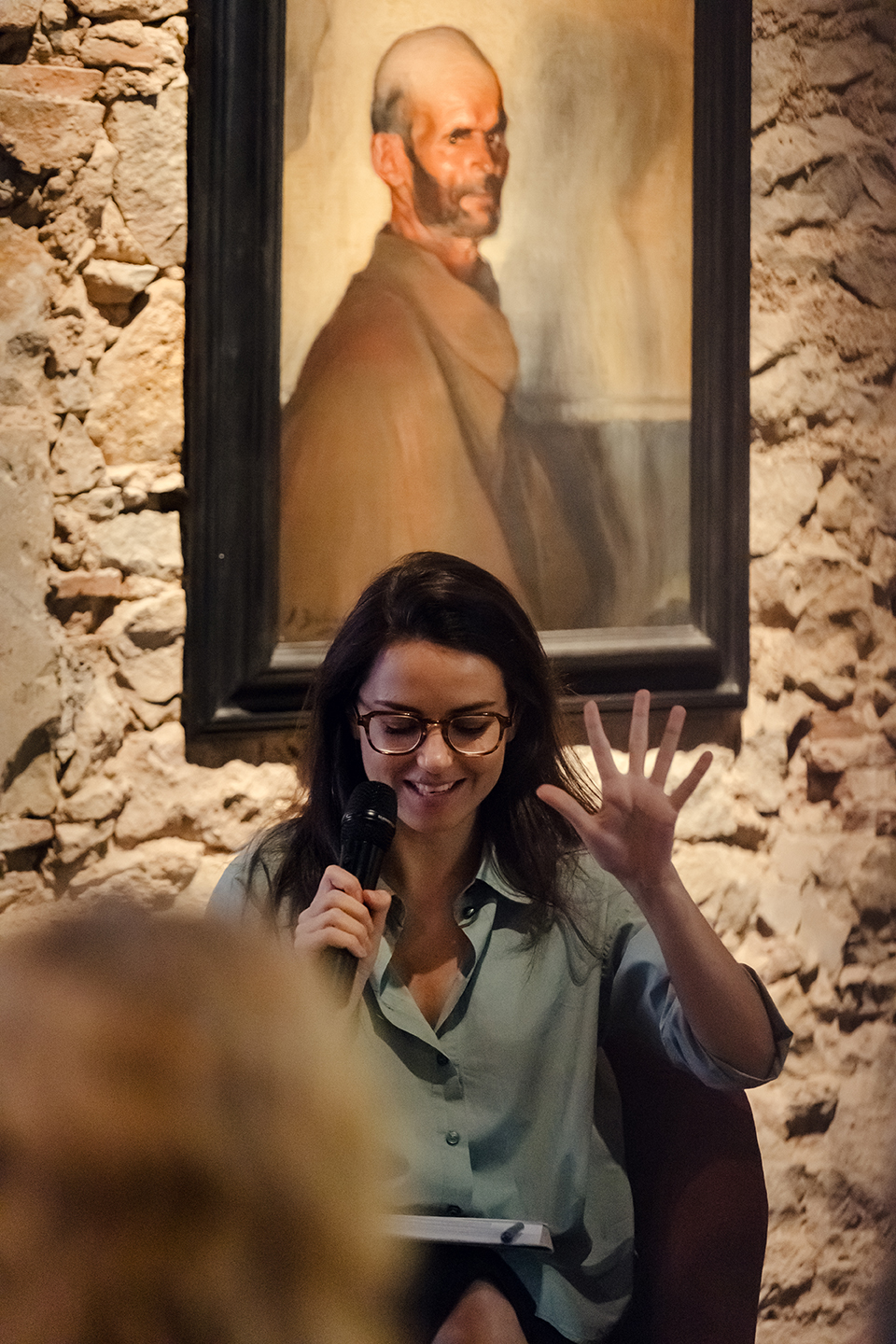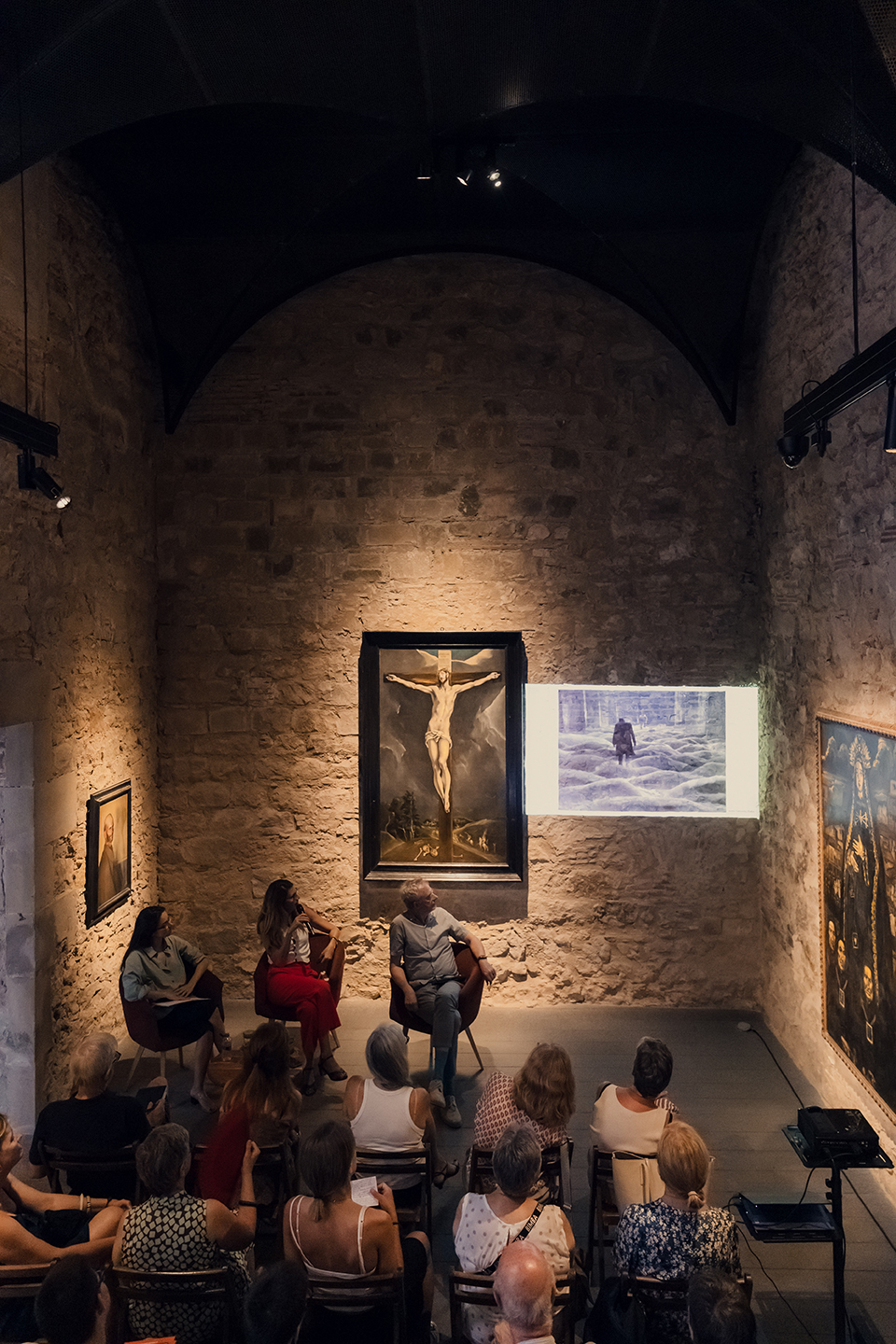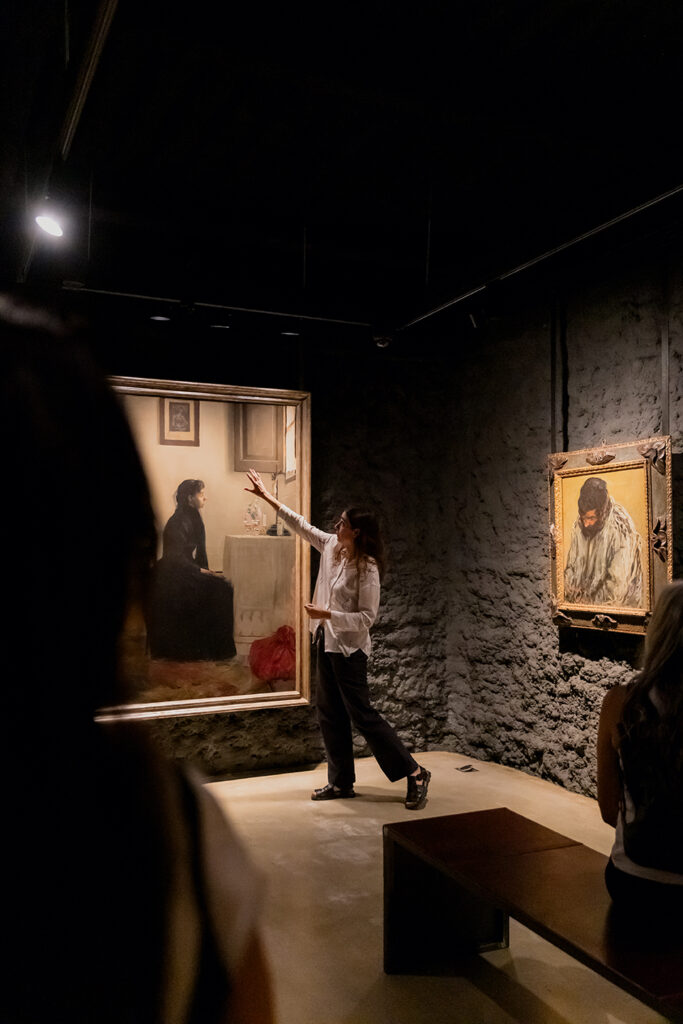
The round-table discussion “Collections and Architecture: From a Medieval Hospital to Art” offered an opportunity to discover new aspects of the history and transformation of the Hospital de St Saver. Held on the occasion of Barcelona 2026 World Capital of Architecture, the event brought together three perspectives on the building and the collection that it houses. Daria de Seta explored the origins and conceptual and technical development of the building renovation; Alessandro Scarnato contextualised the project within the urban history of Barcelona’s Gothic Quarter; and Cèlia Querol presented the particularities of exhibiting works from the Casacuberta Marsans Collection within the Hospital de St Saver.
In order to analyse the experience of viewing art within the context of a desacralised space such as the former church of the Hospital de St Saver, where the collection is now housed, architect Daria da Seta drew on André Malraux’s reflections on the role of museums:
“A Romanesque crucifix was not, above all, a sculpture; Cimabue’s Madonna was not, above all, a painting; even Phidias’s Athena was not, above all, a statue.
The role of museums in our relationship with works of art is so great that it is difficult for us to imagine that it does not exist, that it never existed, wherever the civilisation of modern Europe was or is unknown; and that among us it has existed for less than two centuries.”
André Malraux, The Imaginary Museum, 1947.