
Works and Patrons in Catalonia and Aragon in the 14th Century
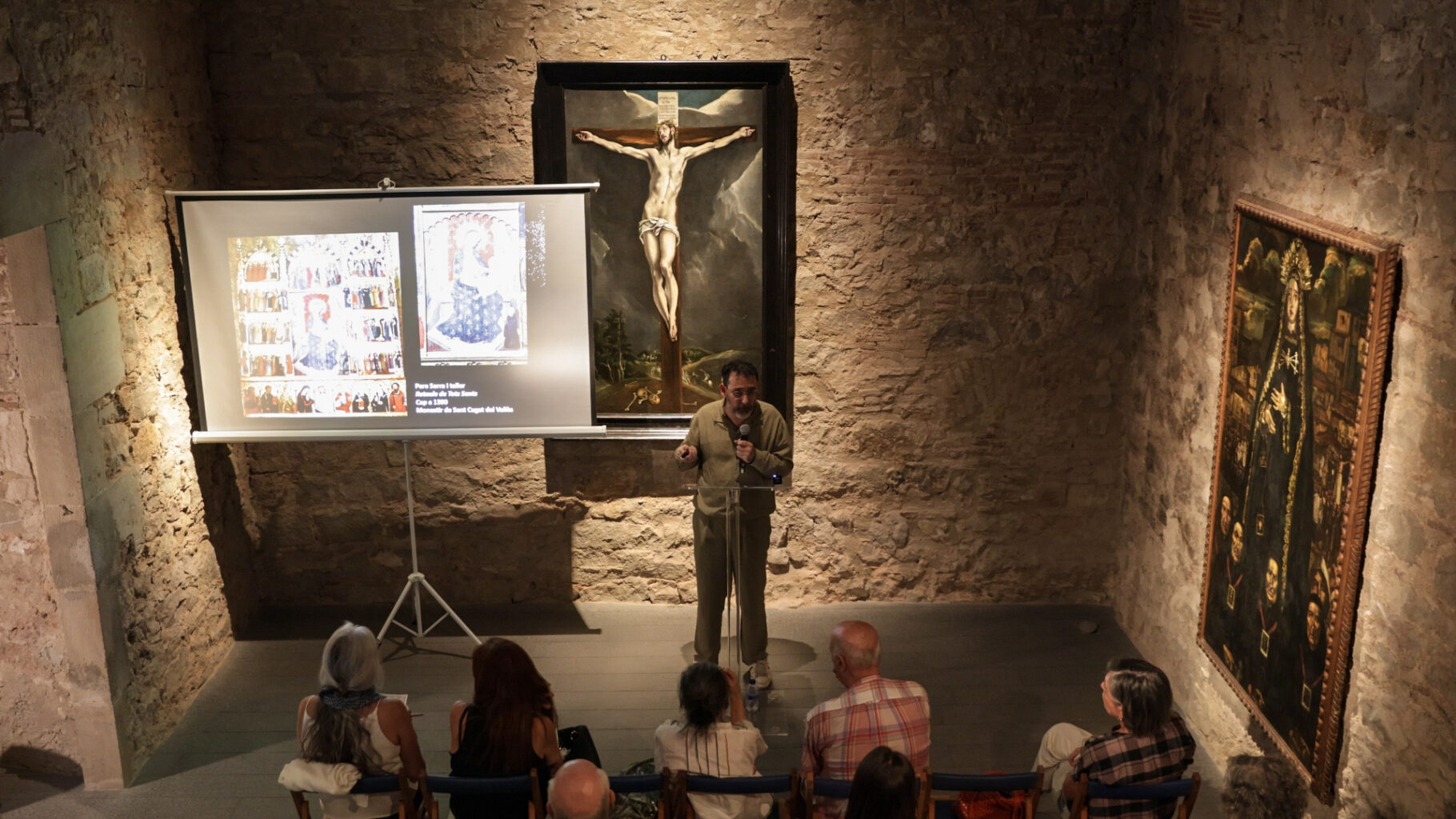
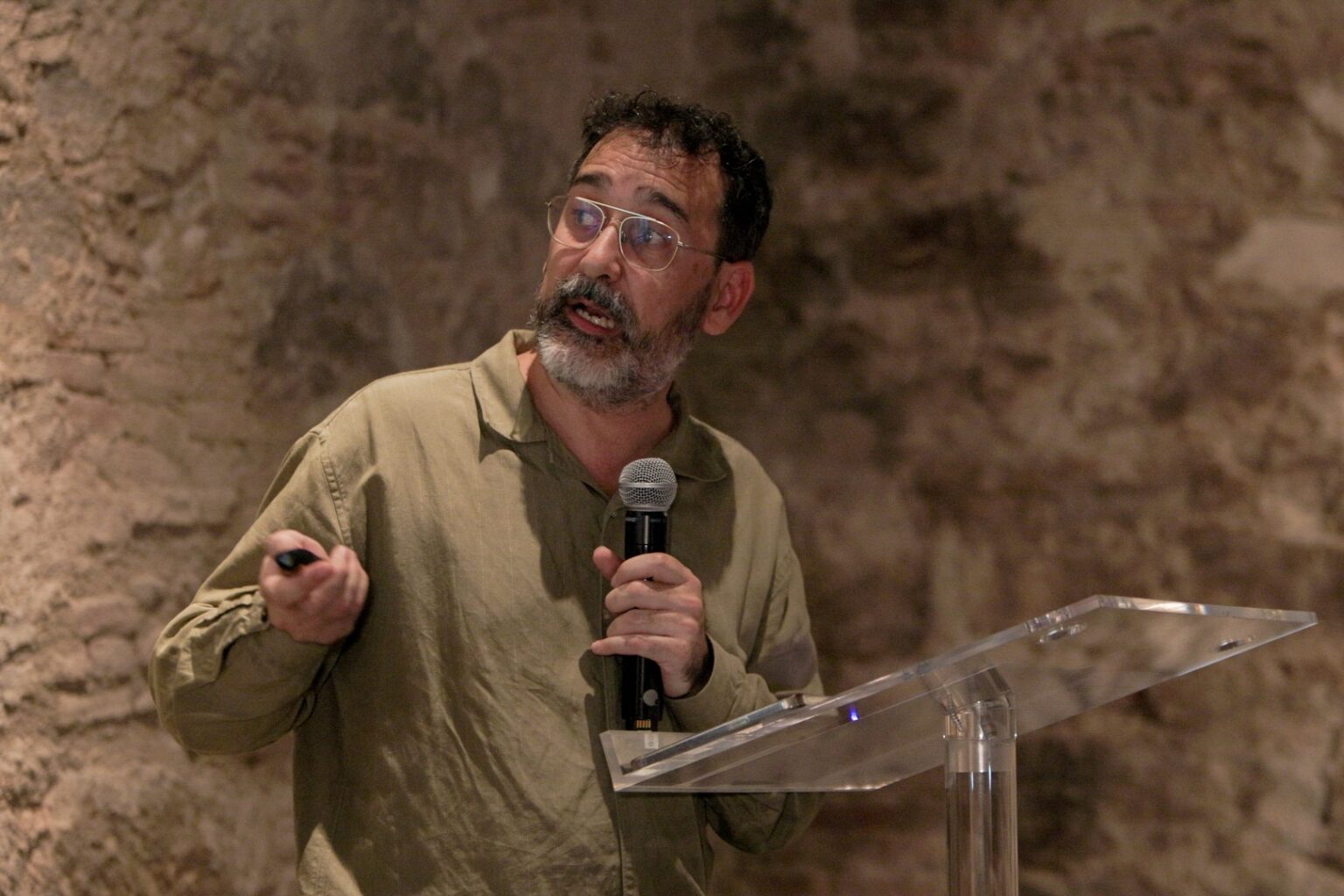
On 22 September, Dr Alberto Velasco presented his research on the artistic activity of the Serra family workshop at Hospital de St Saver, one of the most prolific and distinctive workshops in 14th-century Barcelona, comprising Francesc, Jaume, Pere, and Joan Serra.
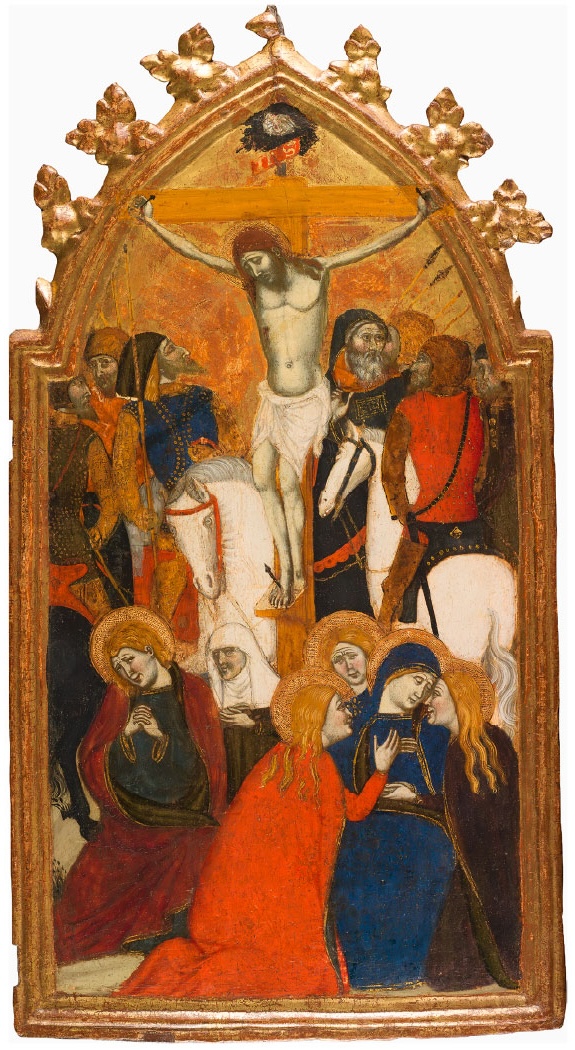
Dr Velasco, who had delivered a lecture on these painters at the Museo Nacional del Prado the previous week as part of the international symposium Gothic Mediterranean: Networks, Artists and Forms between Italy and Spain (1320-1420), took this opportunity to revisit the subject and examine in more detail one of the works from the Casacuberta Marsans Collection.
The work in question is the Calvary attributed to Jaume Serra. As Dr Velasco explained, its composition derives from 14th-century Italian models, specifically those of Siena, which reached the Iberian Peninsula almost simultaneously through another group of painters active within the Crown of Aragon, Ferrer and Arnau Bassa. From a formal perspective, the small dimensions of the panel suggest that it was intended for private devotion. Moreover, the marks visible on the left edge indicate that it probably used to belonged to a diptych, a format frequently used by Jaume Serra.
Aside from analysing the panel from the Casacuberta Marsans Collection, the lecture offered valuable insight into the diverse patronage around the Serra workshop: who their main clients and patrons were, and how these individuals chose to represent themselves through the heraldic motifs and coats of arms seen on many of the altarpieces.
About the Speaker
Alberto Velasco González holds a PhD in Art History from the University of Lleida. He is currently an Associate Professor in the Department of Geography, History and Art History at the University of Lleida, and also teaches at the Open University of Catalonia (Universitat Oberta de Catalunya). He is a Full Member of the Royal Catalan Academy of Fine Arts of Sant Jordi and serves as a member of the governing board of the Public Foundation Institut d’Estudis Ilerdencs (Provincial Council of Lleida). He is a member of the Advisory Board of the Museum of Montserrat and of the Scientific Council of the Turó de la Seu Vella Chair at the University of Lleida.
His research specialises in medieval art, the history of collecting, and the history of the art market in Catalonia, fields in which he has published extensively. He is also a regular contributor to a number of media outlets, including El Punt Avui and Segre.