Pablo Gargallo was pivotal to the development of modern sculpture. The significance of his achievements in this field has, however, tended to overshadow his work as a draughtsman – an aspect of his artistic practice that deserves greater recognition.
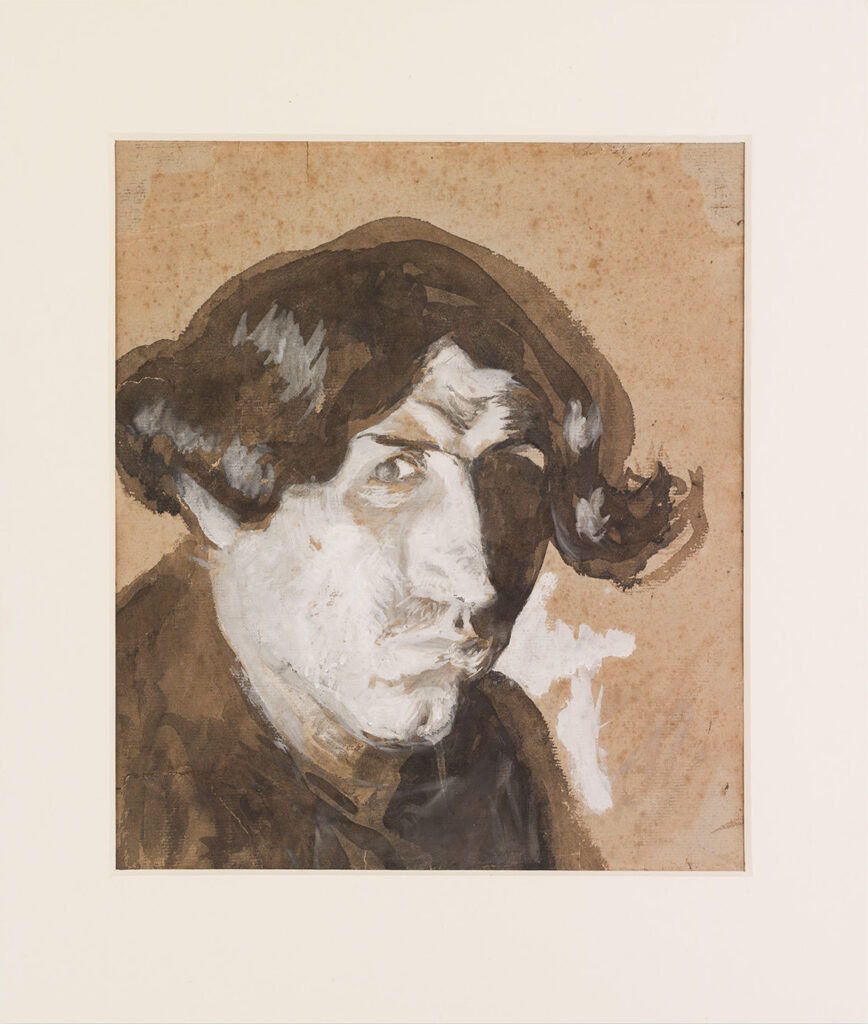
Dated 29 March 1904 on the reverse,, this self-portrait was drawn shortly after Gargallo returned to Barcelona from Paris, where he had spent several months exploring the city’s artistic milieu. In March 1904, he moved back to his studio on Carrer del Comerç, where Picasso had been staying in his absence. It was there that he produced the first studies for the figure that would eventually become, almost thirty years later, his Great Prophet.
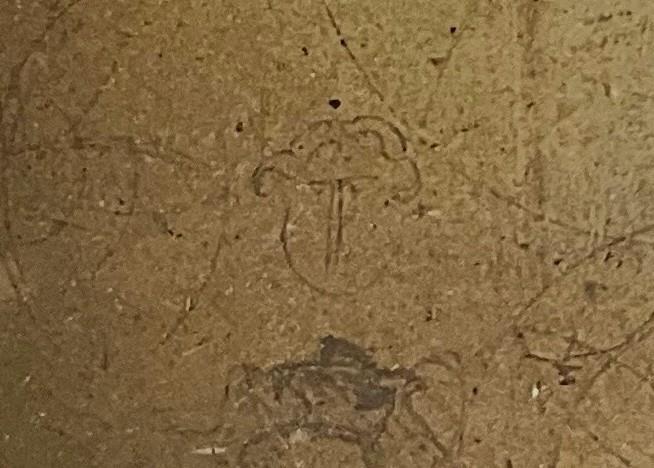
Executed on a cardboard support, the reverse of this self-portrait bears several sketches, undoubtedly by Gargallo’s own hand, made after the self-portrait itself. The largest explore the projection of helical forms in space, analysing the volumes of a sculpture and the interplay between solid forms and empty spaces that characterises his bronze figures. A smaller sketch depicts the silhouette of one of his best-known sculptures: his bronze Self-Portrait of 1927.