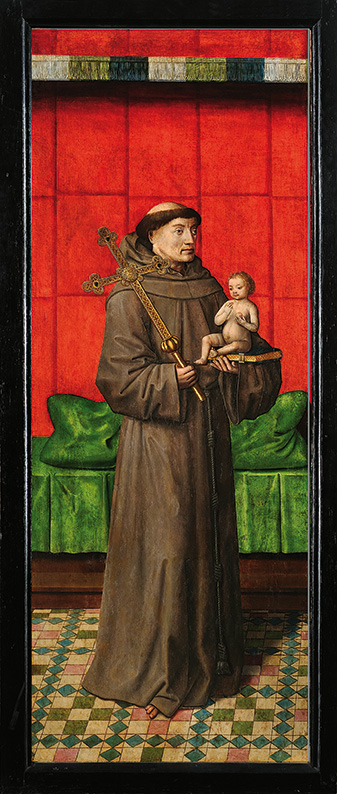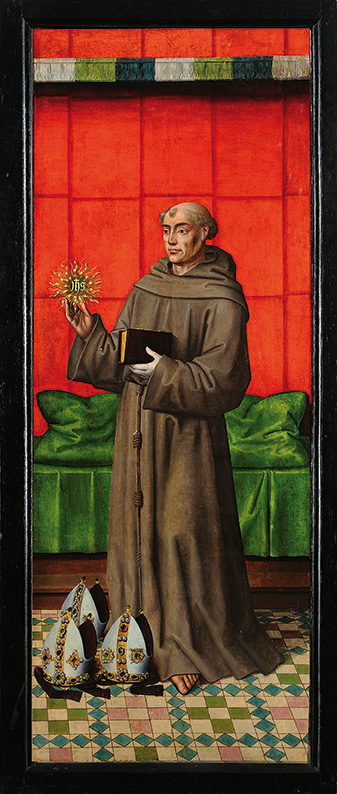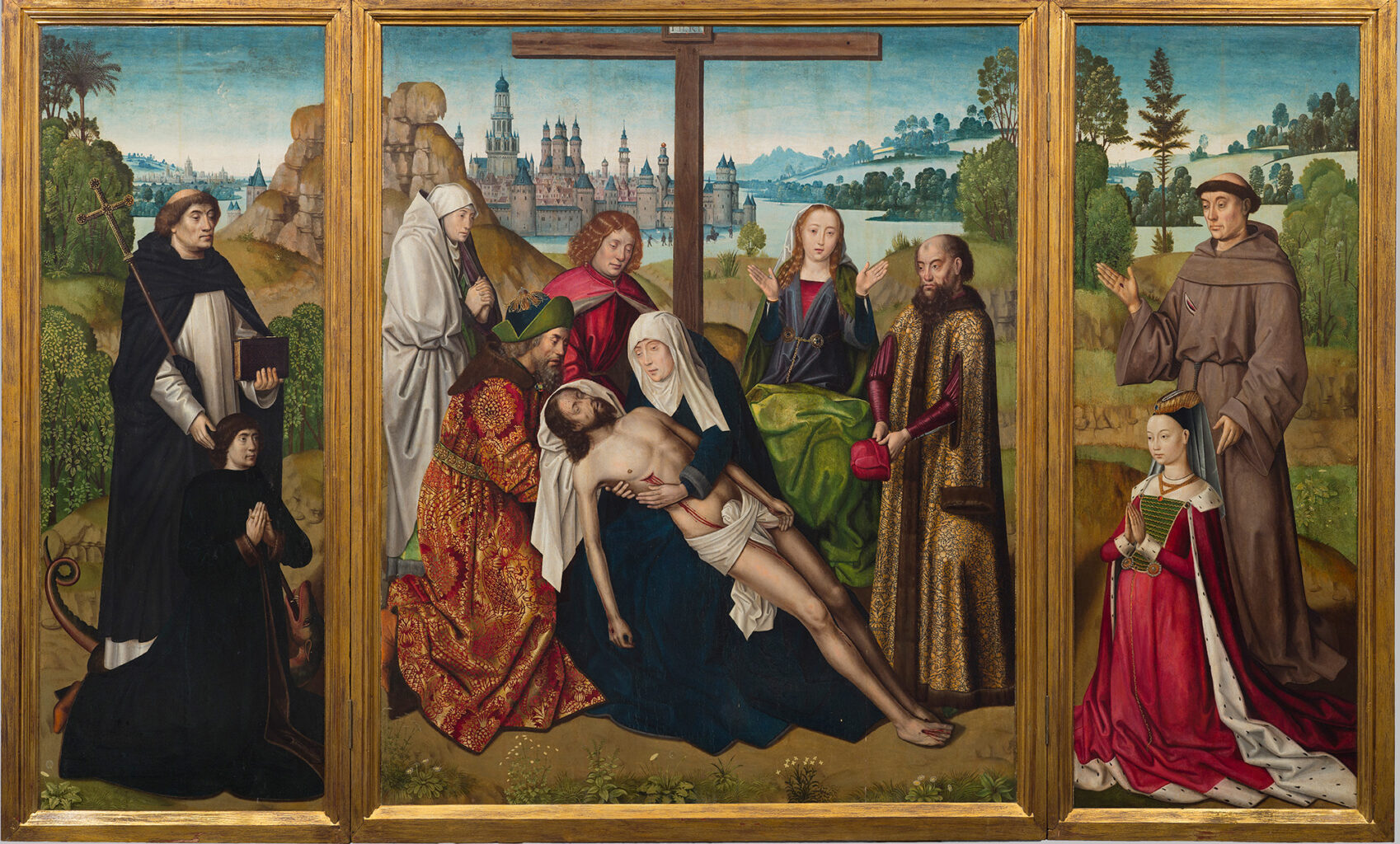
The so-called Bizkaia Triptych is one of the most significant works created by the Master of the Legend of Saint Lucy, a painter who, in the late 15th century, emerged as the main competitor to Hans Memling in Bruges. As Till-Holger Borchert, former Chief Curator of the Groeningemuseum and the Arentshuis in Bruges, has observed, this monumental triptych attests to the artist’s prestige and his ability to attract important commissions from foreign patrons:
“Van Eyck and Memling were not the only painters in the city to receive prestigious commissions. Among the so-called Kleinmeister, one artist enjoyed equal esteem among his patrons, for whom he was certainly never a second choice. This was the Master of the Legend of Saint Lucy, an anonymous painter of extraordinary virtuosity in the rendering of detail and light, who attracted an international clientele…”
Discussing this work specifically, Borchert writes:
“…It is a monumental triptych measuring 2.90 × 1.76 metres wide open. The central panel depicts the Lamentation of Christ. The composition, based on a model ultimately derived from Rogier van der Weyden through Dieric Bouts, shows the lifeless body of Christ resting on the lap of the Virgin Mary, who tenderly embraces her son. Nicodemus kneels before Saint John the Evangelist, who supports Christ’s head. Mary Magdalene and Mary Salome share in the grief, as does Joseph of Arimathea, who has removed his hat as a gesture of silent mourning. On the inner wings, the donors are shown in prayer beside their patron saints, Saint Dominic and Saint Francis. Their choice is enigmatic, particularly since the outer wings depict two other Franciscan saints, Saint Anthony of Padua and Saint Bernardino of Siena.”
Borchert, Till-Holger. “A New Work by the Master of the Legend of Saint Lucy,” in Ars Magazine, no. 34, May–June 2017, pp. 60–70.